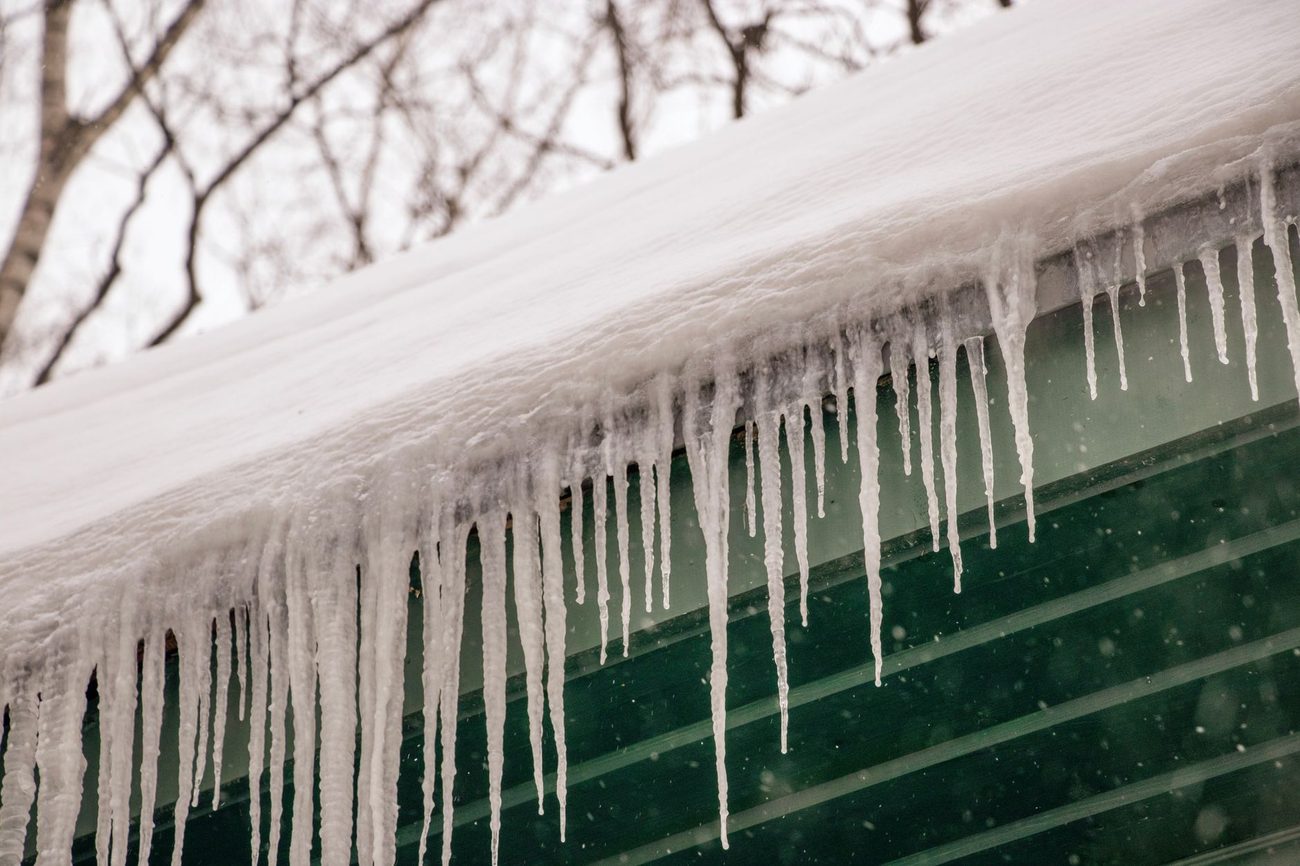
Last February I stood in the driveway with a cup of coffee and counted the icicles hanging off the back of the Cape. There were nineteen, and the biggest one reached the top of the bushes under the kitchen window. Behind them, along the main eaves, ran a ridge of ice about five inches thick. On Sunday, after last week's snow, I did the same count from the same spot. Three icicles, none longer than a pencil, and a lip of ice along the gutter edge I could have snapped off with a mitten.
So the insulation did something. It just didn't do everything, and the part it didn't fix sits right over our bedroom.
Why our roof made ice in the first place
An ice dam is a heat problem that shows up as a water problem. Warm air leaks into the attic, the underside of the roof deck warms up, and the snow on top melts even when it's 20 degrees outside. The water runs down the roof until it reaches the overhang, which sits outside the walls and stays cold, and there it freezes. Repeat that for a few weeks and you've built a dam, and the next round of meltwater pools behind it looking for a way under the shingles.
A Cape is close to the worst shape for this. Our upstairs bedroom is tucked under the roof, so the sloped parts of its ceiling have only a rafter's depth of space between the drywall and the shingles. Before October we had about R-11 in the top attic, knee walls that were partly bare and plenty of gaps where warm air could slip into the attic spaces. You could see it from the street. After a snowfall our roof melted in stripes that lined up with the rafters, while Gary's stayed evenly white for days.
What changed after October
I wrote about the insulation job back in October: air sealing, cellulose blown to R-49 in the top attic, and the knee walls and the floors behind them insulated, all in two days. The blower door number dropped from 2,950 to 2,080 CFM50. On the roof, this winter looks like this:
- After the big snow in early January, the main roof stayed white and even for almost a week. No stripes.
- The ice on the front and back eaves is a thin lip, maybe an inch, instead of a five-inch ridge.
- The icicles are too small to interest Moose, who spent last February eating the ones that hung over the side steps and considers this winter a downgrade.
- Inside, the little knee-wall doors in the bedroom no longer feel like refrigerator doors when you put a hand on them.
The snow on the roof turns out to be an honest report card. It doesn't care about rebates or invoices.
What it didn't fix: the dormer valley
Where one of our dormers meets the main roof there's a valley, and snow slides off both roof planes into it and piles up deeper than anywhere else. That valley still builds ice. Less than last year, but a real ridge, about three inches thick at the bottom where it meets the gutter, and it was there by the second week of January.
When I asked the crew lead about that spot in October, he said the sloped section of ceiling between the knee wall and the top attic is the hard part of any Cape. It's a narrow rafter bay holding whatever insulation went in decades ago, and you can't really reach it without opening the ceiling from inside. They sealed the ends of those bays where they could reach. The middle is what it is. My guess, and it's only a guess, is that a little heat still leaks through there and the valley's deep snow does the rest.
I also made it worse by trusting the insulation too much. We had a heavy snow in mid-December and I didn't rake at all, because I'd decided the problem was solved. By the time I went out after the January snow, the valley had a three-week head start.
What I'm doing about it for the rest of the winter
Two things, both from the ground. First, the $59 roof rake I bought last February. After a big snow I pull the first few feet off the eaves and as much of the valley as I can reach, which is about the bottom third. Second, a calcium chloride sock: one leg cut from an old pair of Tessa's tights, filled with calcium chloride pellets and knotted, then nudged up onto the ice with the rake so it lies across the dam. It slowly melts a channel so the water has somewhere to go besides under the shingles. I use calcium chloride and not rock salt because rock salt is harder on shingles, gutters and the plants underneath, according to both the bag and Gary. One sock cut through the valley ice in about a day and a half.
Tessa watched me hang the first one and said, "It looks like we're curing a ham up there."
It's working for now. But I've started doing something new, which is walking upstairs at night with a flashlight and looking at the ceiling under that valley. So far it's plain white drywall. I check anyway.