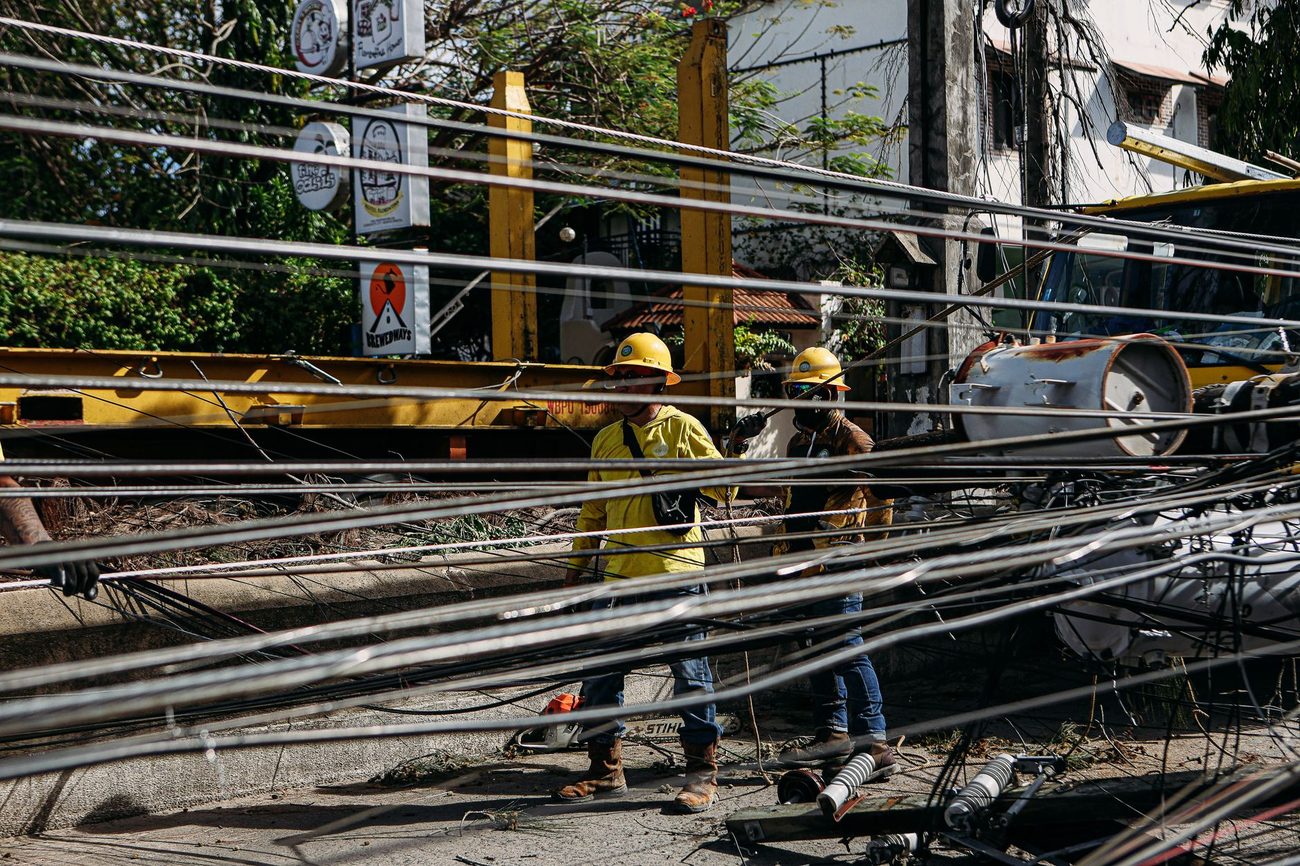
At 7:04 p.m. on Tuesday, July 28, the microwave clock went dark and the dehumidifier in the basement stopped mid-hum. About thirty seconds later the rain arrived sideways, and the silver maple in the back corner started making noises I'd rather not hear again. The power stayed off until about 2 a.m. on Thursday, a little over 31 hours.
It was our first long outage in the Cape. Here's what held up, what didn't and the generator question I've been putting off since we moved in.
What kept working
The sump pump was my first thought, and the reason I'd spent about $752 on a new Zoeller pump, a battery backup and a water alarm back in March. Around 9 p.m. I went down with a flashlight and sat on the basement stairs to listen. Every few minutes the float clicked and the backup pump ran, a higher, whinier sound than the main pump, for maybe twenty seconds at a time. It kept that up all night as the rain came and went. The alarm never sounded, and the floor stayed dry. We also carry water backup coverage on our policy, and I'd like to go on never learning how that claim process works.
The water heater doesn't need electricity, so we had hot showers the whole time, which felt like a luxury by Wednesday night. The six window screens I redid in May earned their $58, because every window in the house was open. And the big limb over the garage that the arborist told us to watch stayed right where it was. A lot of small branches came down. Nothing big did.
The house got warm, though. Upstairs was too hot to sleep, so we slept on the living room floor with the windows open, and Moose stretched out on the cool basement floor and refused to come up.
What we lost
We kept the fridge closed Tuesday night and hoped. At 10:30, when the estimated restore time on the outage map jumped to Wednesday evening, Tessa decided we were done hoping. She drove to a store on 28th Street that still had power and bought ice, and we packed the milk, eggs, cheese and meat into our camping cooler. On Wednesday morning my dad came by to take Moose to Jenison for the day, where it was cool and bright, and on the way home from work I picked up a second, cheap cooler for $35. By then the estimate had slid into Thursday.
The freezer was only about half full, and a half-full freezer doesn't hold cold for long. By Wednesday evening most of it had thawed: ground beef, a bag of shrimp, two frozen pizzas, ice cream that was now soup. Add the leftovers and a few condiments we weren't sure about, and we threw out about $140 of food. Our insurance deductible is $2,500, so there was no claim to think about.
Dinner on Wednesday was cooked on the camp stove we'd just brought back from Ludington, outside on the back stoop and nowhere near an open door. Our phones charged in the Tacoma. When the hallway light we'd forgotten to switch off came on around 2 a.m. Thursday, it woke us both, and I've never been so glad to be woken up.
The generator question
I priced a 2,500-watt inverter generator at $649, plus about $60 in heavy-duty cords. Something that size would have run the fridge, the main sump pump, a couple of fans and our phones. It would not have run the AC. Then I did the part that always takes the shine off: gas, fuel stabilizer, a monthly test run, a place to store it and the fact that it has to run outside, well away from doors and windows, with cords coming in through a gap somewhere. Carbon monoxide is why that last part exists, and it's the piece of generator ownership I'd take most seriously.
Against that, we lost $140 of food in the longest outage we've had in more than two years in this house. The scary part, water in the basement, was already handled by the battery backup. At this rate, a generator pays for itself in groceries somewhere around the fifth outage like this one.
So the answer is no, not yet. It went into the house sheet with the date and a short list of things that would change my mind: outages this long more than once a year, the battery backup coming up short, or a long one in January. The second cooler lives in the basement now, right next to the sump pump that earned its keep.