"Kyle, your dog is in my garage." Gary called at 7:10 on a Saturday morning sounding more amused than annoyed, which is generous for a man whose garage holds a retired millwright's entire life of tools. When I got over there, Moose was sitting very politely next to Linda, who was feeding him a piece of toast.
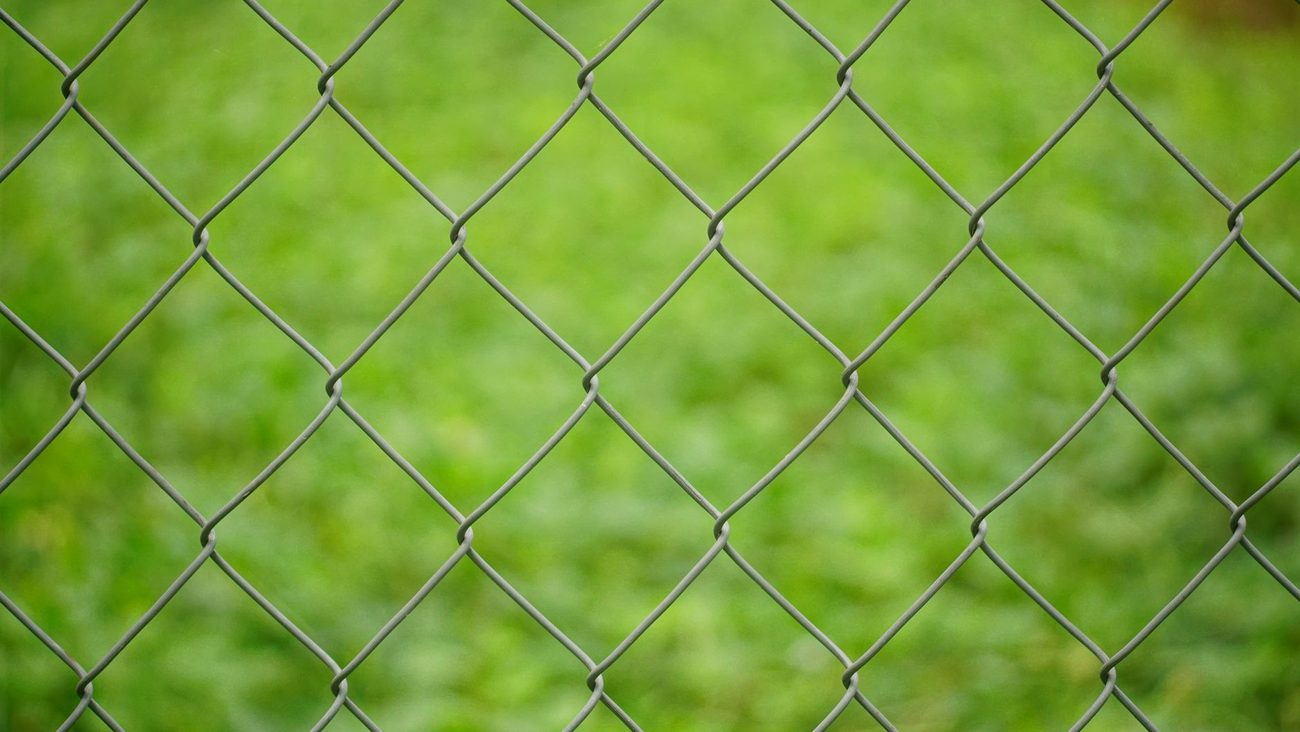
That was the first time. Our backyard has a 4-foot chain-link fence with a gate on the driveway side, closed with a standard fork latch: a U-shaped fork on the gate that drops over the post, with a lever you lift to open it. Sometime in early May, Moose worked out that if he shoved his nose under the lever and lifted, the fork came off the post and the gate swung open. It took him about a week to get reliable at it. He's about four now. Apparently that's how long it takes him to get bored enough to become an engineer.
Fix one: a zip tie
I zip-tied the fork to the post that afternoon. Moose couldn't do a thing about it. Neither could anyone else. Every time I wanted to get the mower into the backyard, or Tessa wanted to haul a bag of soil back to the raised beds, someone had to find scissors, cut the tie and remember to put a new one on. On day two I cut it to mow, meant to replace it when I finished and went inside for a glass of water instead. That was the whole failure. It wasn't the zip tie's fault.
Fix two: a carabiner
The carabiner was supposed to be the grown-up version. I clipped it through the fork and around the post, and Moose had no answer for it. The problem was us. A carabiner takes two hands, and Tessa, coming through the gate with a flat of tomato plants, told me, "I am not doing a carabiner with my hands full." Two evenings later she came in from watering the beds, the carabiner was hanging open on the fence and Moose was at Gary's within ten minutes. Second visit. Linda had saved him the crust this time, which tells you everything about why he keeps going.
Fix three: a gravity latch
What finally worked was a $34 gravity latch with a pull string. It mounts near the top of the gate: a latch bar on the post and a striker on the gate. When the gate swings shut, the striker rides up the bar and the bar drops into place by its own weight. Nobody has to remember anything, which is the entire point. From the yard side you lift the bar by hand. From the driveway side you pull a short string that runs through the latch.
I mounted it near the top rail, well above where a 70-pound dog can comfortably work his nose, and kept the pull string short and on the driveway side. I've met this dog. If there's a string hanging within reach, it's a toy.
The first install didn't latch at all. Our gate sags about half an inch at the latch end, so the striker passed under the bar instead of lifting it. I spent twenty minutes trying to shim the latch before I realized the fix was at the other end. I loosened the hinge bolts on the post, lifted the gate half an inch, retightened them, and the striker caught the bar on the first swing. Thinking about it now, that sag probably made the old fork latch easier to nose open too. I'd been fighting a symptom for two weeks.
The apology tour
Moose visited Gary and Linda twice in eight days. Both times he was found inside their garage, both times he was delighted about it and both times Gary walked him home by the collar. I brought over a coffee cake from Meijer and an apology. Gary accepted the coffee cake and waved off the apology. Linda asked if Moose could still come over "on purpose, with you." That has been arranged for Sunday afternoons.
The gate has latched itself shut every single time since. Moose still walks over to it every morning, looks at the new latch, looks back at me and lies down in the grass. Total spent on keeping one dog in one yard: $34, plus a zip tie, a carabiner and a coffee cake.