One hundred twelve dollars. That's what the City of Grand Rapids wanted for water and sewer on this month's bill, against the $78 a month we'd been averaging since we moved in. Tessa set the bill on the counter next to my coffee and tapped the total twice without saying anything, which in our house counts as a full conversation.
I wanted to know how much of the jump was the lawn, how much was Tessa's new raised beds and how much was just two people in July taking more showers. So I did what any reasonable person with a spreadsheet would do and started reading the water meter on Sunday nights.
Two weeks of meter readings
Our meter is in the basement by the front wall, where the service line comes in. It reads in cubic feet, and our bill charges by the unit, which is 100 cubic feet. One cubic foot is about seven and a half gallons, so a unit is roughly 750 gallons.
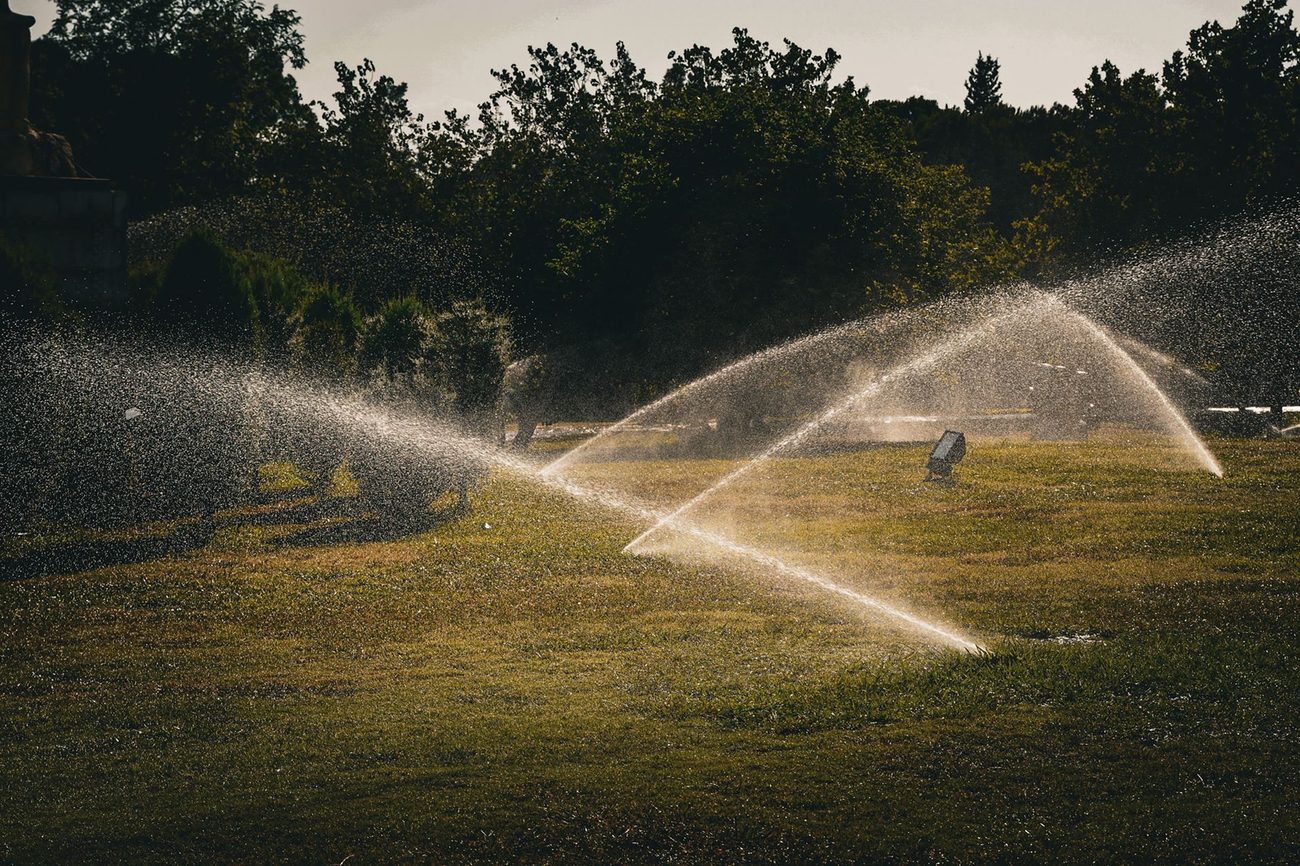
The first week, July 6 to 13, we did what we'd been doing all summer: the oscillating sprinkler three evenings a week, about 40 minutes on the front lawn and 40 on the back, plus Tessa watering the beds with the hose most evenings. The meter moved 298 cubic feet.
The second week, July 13 to 20, a thunderstorm on Monday dropped almost an inch of rain, so I left the sprinkler off all week while Tessa kept watering the beds as usual. The meter moved 104 cubic feet.
To separate the beds from the house, I timed the hose filling a 5-gallon bucket (40 seconds) and then timed Tessa watering, which she tolerated exactly once. She runs the hose about four minutes per watering, four evenings a week, which comes to around 120 gallons, or 16 cubic feet. That leaves roughly 88 cubic feet a week for the house itself, about 95 gallons a day for the two of us, which seems normal.
So the lawn was drinking about 194 cubic feet a week, close to 1,450 gallons. The beds were drinking 16.
What that means in dollars
Our spring bills ran about 4 units a month. The $112 bill showed about 8. Those extra 4 units cost about $34, which works out to roughly $8.50 a unit once water and sewer are both counted. As far as I can tell from how our bill is laid out, the sewer charge follows the same meter reading, so lawn water gets billed as if it went down the drain. I've seen people mention separate irrigation meters. I haven't looked into whether that's an option here, or whether it would ever make sense for a lawn this small.
Put together: about $34 of our $112, roughly 30 percent, went into the yard. The raised beds were about $6 of that. The lawn was the rest.
Less often, deeper, and not on the driveway
Next I set three empty tuna cans across the front lawn and ran the sprinkler for 40 minutes. Each caught about a third of an inch. Three sessions a week were putting down roughly an inch, which is about what the lawn advice I've read calls for in summer, so the amount wasn't crazy.
The waste was somewhere else. When I stood at the end of the driveway and watched the sprinkler go through its full swing, about a third of every pass was landing on asphalt. I'd set the arc wide in May and never looked at it again. For two months I had been carefully watering 70 feet of driveway.
Here's what we changed:
- The sprinkler arc is narrowed so it stops at the grass.
- Watering moved to early morning, twice a week, about an hour per section, so less of it evaporates in the afternoon heat.
- If we get a real rain, we skip.
- The front lawn is allowed to go a little tan in August. That one was Tessa's ruling. The tomatoes get water first.
The beds were never the problem. Her tomatoes are as tall as the fence now, and at about $6 a month they're the best deal on the property.
I'll keep reading the meter on Sunday nights through August and see whether the next bill agrees with my math. Meanwhile, Moose has decided the 6 a.m. sprinkler is a game. He stands in it until he's soaked, so some of our lawn water is now technically dog water.