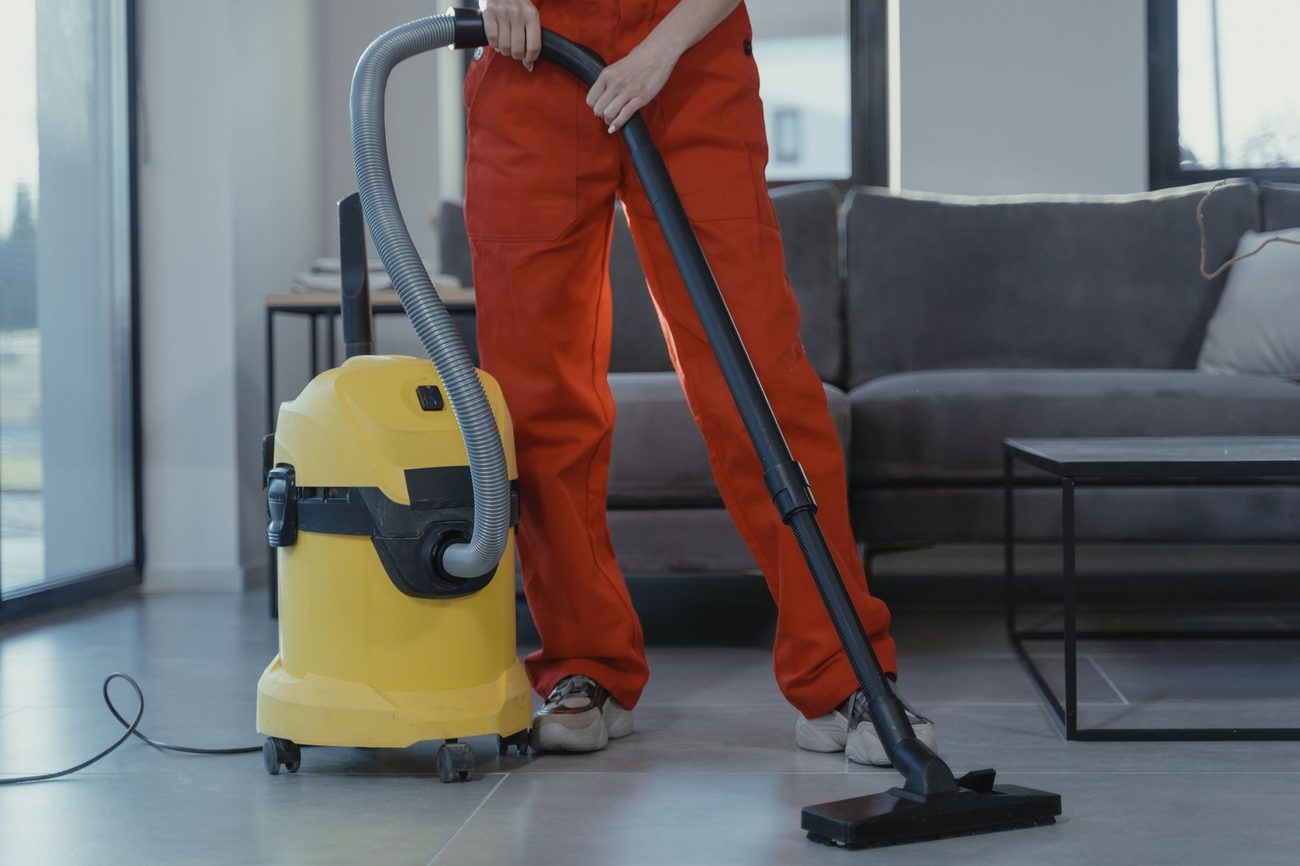
For two years I cleaned our shop vac filter by banging it against the driveway until a gray cloud came off it. That worked fine for sawdust, leaves and whatever lives behind the dryer. Then in February I sanded the drywall patch on our upstairs ceiling, and the filter caked over in about four minutes.
The filter that quit in February
Our shop vac is a 12-gallon Ridgid I bought in 2024 for $99. For most jobs it's been great. Drywall dust is different. Joint compound sands into a powder fine enough to coat the pleats of a standard filter almost immediately, and once that happens the suction drops and fine dust starts coming out the exhaust. That February I stopped three times to knock the filter clean in the snow, and emptying the canister afterward sent up a cloud in the garage I could taste.
The fix took me until this month. Over Labor Day weekend I spent $108 on three upgrades, and they've changed how I use the thing.
A lid on a five-gallon bucket
The biggest change was a Dustopper, a $40 lid that fits on an ordinary five-gallon bucket ($5 at Home Depot). The hose from the job plugs into one port on the lid, and a short hose runs from the other port to the shop vac. Air spins inside the bucket, and most of the debris, plus a surprising amount of the fine dust, drops into the bucket before the air ever reaches the vac. The filter stays clean much longer, and dumping a bucket into a trash bag is a lot easier than wrestling a 12-gallon drum.
It has downsides. There's an extra hose and one more thing to trip over. You lose a little suction. The bucket tips if you yank the hose too hard. And when the hose clogs, the vacuum pulls on the bucket itself. I learned that one the first weekend, when I sucked up a wad of wet grass clippings from a window well, the hose plugged at the lid and the bucket walls caved in with a loud pop. Nothing broke, and the bucket popped back out when I cleared the clog. I don't feed it wet grass anymore.
A better filter and a longer hose
The second upgrade was a finer-rated Ridgid cartridge filter for $28. I keep the standard filter for wet jobs and sawdust and swap in the fine one whenever drywall or plaster is involved. The third was a 20-foot hose for $35, replacing the stock seven-footer. Now the vac and bucket stay in one spot while the hose goes up the stairs, under the Tacoma's seats or across the whole basement. On the long hose you do give up some suction, enough to notice on the floor mats, so the short hose still comes out for those.
Cleaning changed too. The fine filter gets tapped out inside a trash bag in the driveway instead of banged on the concrete, and the standard one gets rinsed with the hose after a wet job and dries all the way on the workbench before it goes back in. A damp filter plus drywall dust makes a paste I don't need to meet twice.
The real test came the same weekend. There were a few old anchor holes in the walk-in closet upstairs that I patched and then sanded on Monday. Afterward the bucket had a fine gray layer in the bottom, and the filter looked almost new. No cloud, no taste of dust, no banging anything on the driveway.
- Dustopper lid: $40
- Five-gallon bucket: $5
- Fine-dust cartridge filter: $28
- 20-foot hose: $35
Gary looked the setup over and said, "Buy once, cry once." He meant I should have bought a real dust extractor, which costs several times what I spent. He's not wrong for someone who sands drywall every week. For the few days a year I do, $108 got me most of the way there, and the original vac is still running fine.
The long hose had one more benefit I was hoping for. The vac can sit in one room while I work in the next one, which I thought might finally make peace with Moose. It hasn't. He now leaves the room when the hose comes in, because apparently the hose is guilty by association.