Gary held the cut end of the old pipe up to the basement light and squinted through it like a telescope. "You could get a pencil through there," he said. "Maybe." The inside of the 1952 galvanized line to our kitchen was crusted with rust and scale so thick that the opening was about the size of a drinking straw.
That explained a lot. For over a year, filling a pot at the kitchen sink felt like a test of patience. I'd timed it with a gallon jug in May: 41 seconds. Every other faucet in the house, all on 1980s copper, was fine. The kitchen was the one fixture still fed by an original galvanized run, and over seventy years it had been slowly closing itself off from the inside.
Getting a quote first
In June I had a plumber Gary has used for years come look at it. He was straightforward: replace the run with PEX from the copper trunk to the kitchen, new shutoffs, about half a day of work, $1,150. Fair price, as far as I could tell. Then Gary, standing in our basement with his hands in his pockets, said he'd done more PEX than he could count and I could do this one with him over the holiday weekend.
Before we cut anything, I checked with the city's permit office, described exactly what we planned and did what they told me. Cities draw those lines differently, so that conversation is worth having before the saw comes out.
I bought a PEX crimp tool for $48. The rest of the materials came to $214 over three receipts: a 100-foot coil of half-inch PEX, copper crimp rings, elbows and a tee, two quarter-turn shutoff valves, a SharkBite transition fitting for the copper end, pipe clips and a new braided supply line under the sink. One odd fitting needed a trip to a local hardware store because nobody else had it.
The Saturday of the Fourth
We started at 8 a.m. on Saturday, July 5, after a late night of neighborhood fireworks that Moose spent wedged under the kitchen table. I shut off the main at the meter, opened the kitchen faucet and the back spigot to drain the lines and set a bucket under everything.
The old run went from the copper trunk near the water heater, across about 25 feet of joists, with a tee for the back spigot, then up through the floor behind the dishwasher, close to the back wall where the kitchen sink sits. Gary cut the galvanized into sections with his reciprocating saw, and I pulled them out of the joist holes one at a time. Rust flakes came down on my face no matter where I stood.
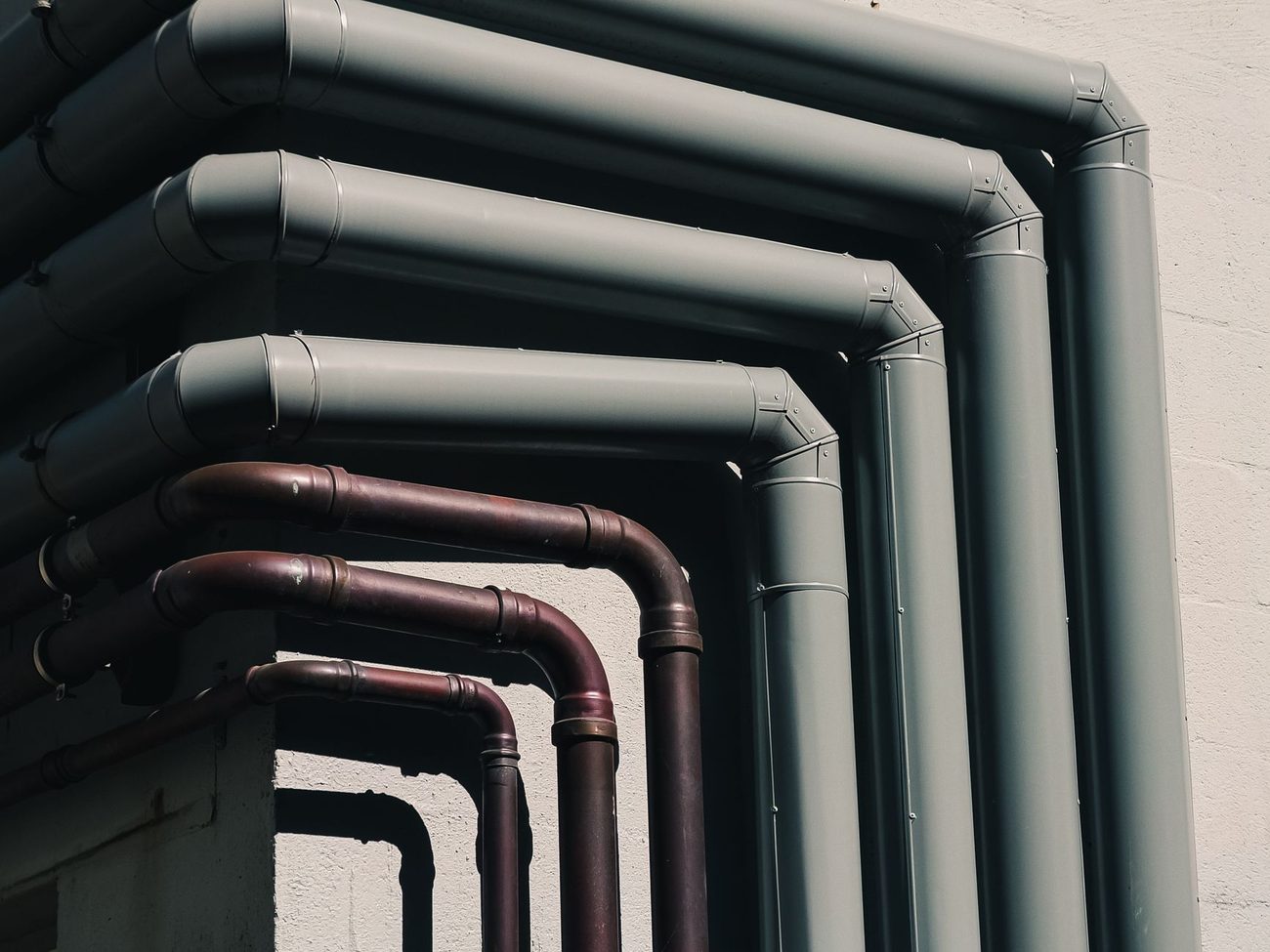
The new PEX went in through the same holes, with clips every few feet and the bends kept gentle. At the trunk, the SharkBite transition joined the new line to the copper. At the back spigot we added a tee and a quarter-turn shutoff, so this fall I can close it from inside and drain the line, something the old setup didn't make easy. Upstairs, a new stub-out came through the floor behind the dishwasher to a new quarter-turn stop under the sink.
The crimp that failed
Every crimp gets checked with a go/no-go gauge, a little slotted tool that tells you whether the ring is compressed correctly. My first crimp failed. I'd held the tool at a slight angle, so the ring was squeezed unevenly. Gary didn't say anything. He just handed me the cutter. I cut the fitting off, lost an inch of pipe and did it again square, and it passed.
After that, I checked every crimp twice and Gary checked them a third time without asking, which I appreciated more than I let on.
By 1 p.m. we were done. I opened the main slowly and walked the whole run with a flashlight and a dry paper towel, touching every joint. Dry. I checked again after dinner and again the next morning.
Then I timed the gallon jug: 14 seconds. Tessa filled a stockpot for corn on the cob that evening, watched it, and said, "Oh. That's what a faucet is supposed to do."
Materials $214, crimp tool $48, total $262 against a $1,150 quote. I paid Gary in bratwurst and a promise to help him move his snowblower this fall, which he'll hold me to. The Menards receipts are in the junk drawer with their rebate slips.
Trip count: 3.