A spigot doesn't make a sound when it freezes and splits. Last January our front hose bib cracked somewhere inside the wall, and the fix in May cost $62 and an afternoon on my back under the basement joists. So when the forecast on my phone showed 30 degrees for this Saturday morning, the outside of the Cape finally got the list we never made last year.
None of it is hard. We just didn't know to do it. When we closed in April 2024, nobody handed us a winter checklist, and the previous owners' 36 years of habits left with them. Here's what we did last weekend and over two evenings this week, roughly in order.
The two spigots
We have two outside faucets. The front one is now the 12-inch frost-free sillcock on its short copper branch, which is supposed to handle winter on its own as long as nothing is screwed onto it. A hose left attached traps water in the long barrel, and that's how frost-free valves end up splitting anyway. So the hose came off first, and I checked twice that it was really off. That's the whole job for the front, and I had to talk myself out of inventing more.
The back spigot by the stoop is still the old kind. Until this summer its branch had no shutoff at all, so last winter it was just exposed. When Gary and I did the PEX run to the kitchen over the Fourth of July, we added a quarter-turn shutoff on that branch, up in the joists near the sump corner, with a tiny brass cap on the side for draining. The routine goes like this: give the valve its quarter turn, go outside and open the spigot, come back in, hold a cup under the little cap and loosen it until the trapped water dribbles out. Then the outside spigot stays open all winter so anything left inside has room to expand. I dropped the brass cap on my first try and spent ten minutes on the floor with a flashlight while Moose sniffed the cup of drain water like it owed him money.
Hoses, chairs and everything else that cracks
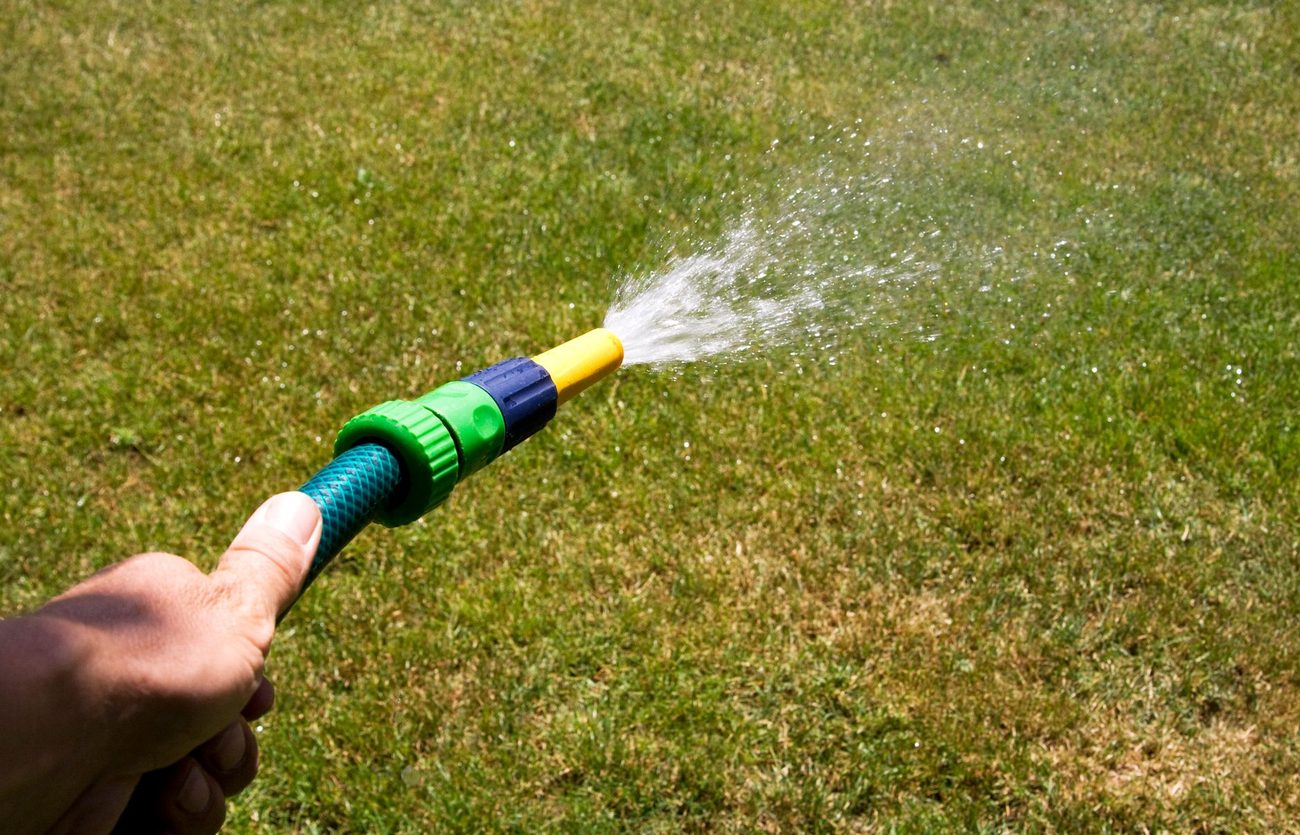
Our hoses spent last winter coiled on the ground behind the garage, and one came out of the snow in March with a split near the brass end. This year I stretched both down the driveway, lifted them hand over hand to push the water out the far end, and hung them on a $9 hose hanger in the garage. That was the only thing I bought for this whole list.
Then the smaller stuff:
- Patio chairs stacked against the back wall of the garage, where Tessa's Civic won't clip them once it moves inside for winter.
- Tessa's terracotta pots emptied and carried to the basement. Wet clay freezes and flakes, which she learned last year.
- The sprinkler, the hose nozzle and the watering wand into a bin on the basement shelf.
- The downspout extensions I added in May stay on. The spring thaw is when they matter most.
- The raised beds got cleared on Sunday. Tessa saved the last green tomatoes in a paper bag on the counter and called the first season "fine, not great."
The yard tools were the easy part. Everything we run outside is on EGO batteries, so there's no gas to stabilize and no carburetor to worry about. The batteries come inside for the winter, and that's about it.
The AC condenser gets a hat, not a coat
I assumed you wrap the outdoor AC unit tight for winter. The tech who did our furnace tune-up last Friday ($119, and his verdict on the 1998 Carrier was "old but sound") said a full wrap can hold moisture and give mice a nice place to spend the winter. His suggestion was to clear the leaves and maple seeds out of the fins and lay something flat on top to keep falling ice and leaves out, with the sides left open to breathe.
So our 2011 Goodman got a soft brush down the fins, the grass trimmed back around the pad and a square of scrap plywood on top with two bricks to hold it down. The condenser is fourteen years old and it's the next big system on the aging list in my house sheet, so it gets the gentle treatment. I'd like it to make it a few more summers before we have that conversation.
What's left for later
The gutters are the obvious gap. Our silver maple hasn't really started letting go yet, and I already know from last fall that one cleaning won't cover it. The insulation crew also comes Tuesday, so the inside of the house is about to get a lot more attention than the outside.
The whole list took maybe three hours spread over three days. The forecast still says 30 on Saturday. I'm going to go check the back spigot one more time anyway.